
Beyond the Tool: What Does "Process as a Service" Actually Mean?
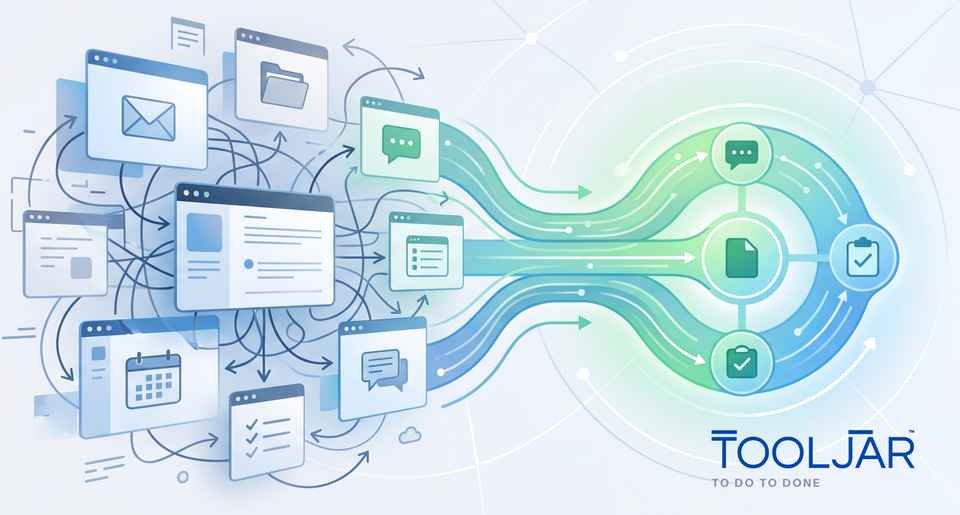
Every time a project gets derailed, or a team feels overwhelmed, the knee-jerk reaction in the corporate world is almost always the same: "Let’s buy a new software tool to fix it."
Fast forward six months, and your team is now juggling another login, another dashboard, and another place where critical information can get lost. The harsh reality is that adding more tools rarely fixes a broken workflow. In fact, it usually makes the scattered work even worse.
To solve this, Tooljar focuses entirely on a better approach: Process as a Service. But what does that actually mean for your day-to-day work?
Instead of giving you a blank workspace and forcing your team to manage the software, we believe that the process itself- how your files, team chats, and client approvals flow together- should be managed for you.
Here is what Process as a Service looks like in action:
- Context is Built-In: Instead of jumping to a messaging app to ask a question and then digging through a cloud drive to find the relevant file, everything lives inside the specific task. The platform serves your workflow, protecting your team's focus.
- A Unified Source of Truth: When the process is managed centrally, you never have to hunt for the latest brand kit or a lost client approval. The process ensures the right assets are always attached to the right project.
- Execution Over Administration: By unifying your workflow into one environment, your team stops acting as project administrators and goes back to being experts in their respective fields.
Software should adapt to the way you work, not force you to change your habits to fit a dashboard.
We recently launched Tooljar to help teams stop managing tools and start trusting their process. If your team is exhausted from constant app-switching, it is time to look beyond the tool.
Over to you: Has introducing a new software tool ever made your team's workflow more complicated instead of easier? Let's chat in the comments!